For homes and businesses

Solar Batteries / Battery Energy Storage Systems

Battery storage can retain excess solar for evening use. Capacity, power, compatibility, battery location and the proposed operating settings all form part of the site assessment.

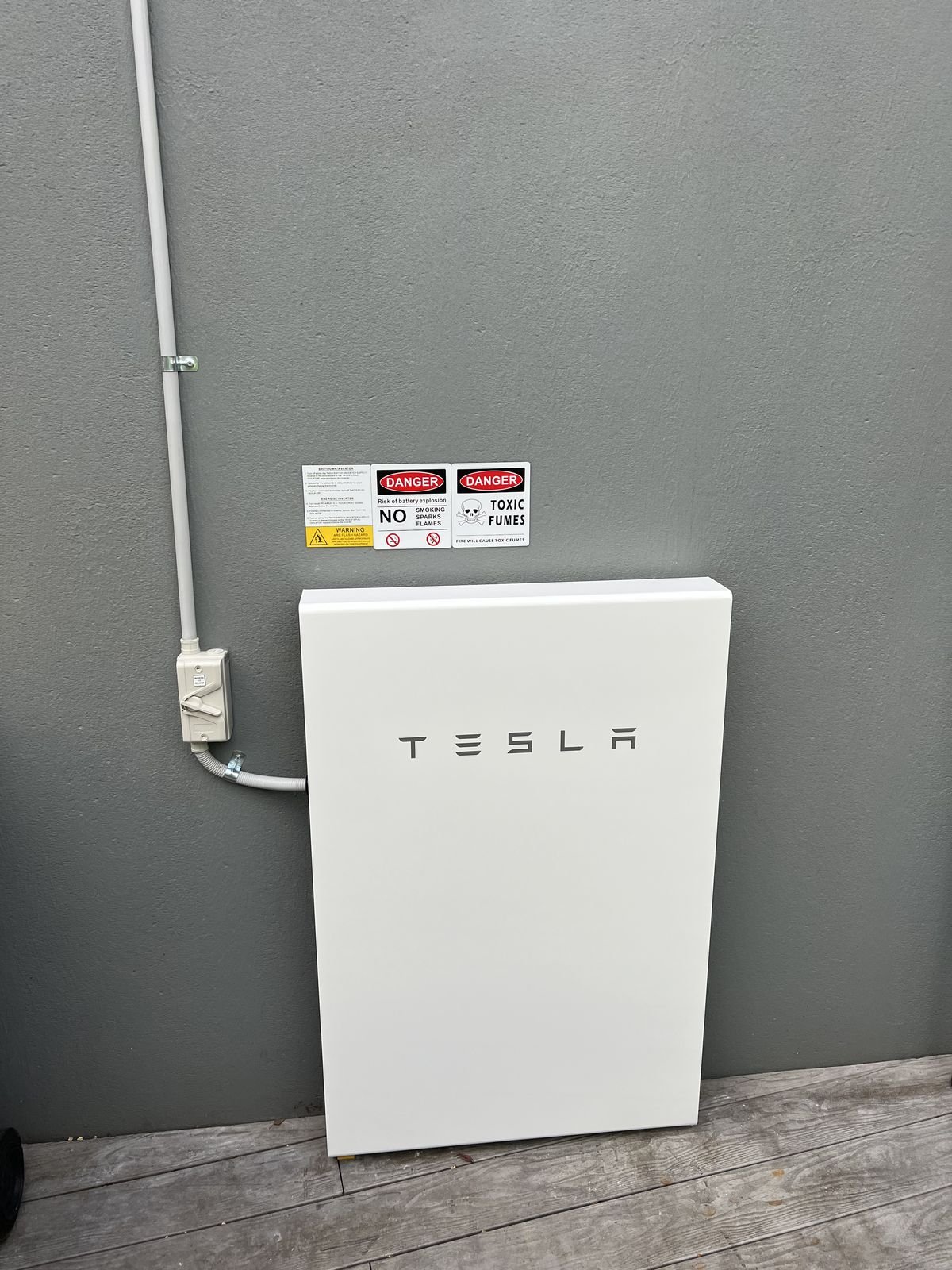
Wall-mounted home battery beside an inverter

Energy for later

A battery can store excess solar generation during the day for use in the evening. It may reduce purchases from the grid during higher-tariff periods, depending on the property’s usage, tariff and system design.

Not every feature is automatic

Grid charging, backup power and eligibility for any support program depend on the equipment, installation settings and current rules. If one of these features matters to you, raise it during the assessment.

Suited to

  • Homes with higher evening electricity use
  • Existing solar systems being assessed for storage
  • Businesses considering energy-use management
  • Sites that want to discuss backup design

What is included

  • Usage and battery sizing review
  • Solar and inverter compatibility check
  • Switchboard and battery-location assessment
  • Installation and commissioning
  • Monitoring walkthrough where supported

What we assess

  • Existing solar and inverter equipment
  • Evening and overnight demand
  • Switchboard space and condition
  • Battery clearances and safe location
  • Whether backup is required and for which circuits

Process

How the solar batteries / battery energy storage systems process works

  1. Review usage

    Discuss existing solar, demand and priorities.

  2. Check compatibility

    Assess inverter, switchboard and battery location.

  3. Recommend a configuration

    Explain capacity, power and any requested backup design.

  4. Install and configure

    Complete approved work and explain operation.

Questions

Solar Batteries / Battery Energy Storage Systems questions

All questions
What is the difference between kW and kWh?

Kilowatts (kW) measure power: the rate energy is being used or supplied at a moment. Kilowatt-hours (kWh) measure energy over time. A 2 kW appliance running for three hours uses 6 kWh.

Will a battery keep my power on during a blackout?

Only if the system is designed for backup. It depends on the battery, the inverter and how the switchboard is configured. Tell us if backup matters to you.

Can a battery be added to my existing solar?

In many cases. Compatibility depends on your current inverter and switchboard, which is checked during the assessment.

Ready to talk about solar batteries / battery energy storage systems?

Tell us about your property and what you need. It takes about three minutes.

Get a quote